Maximising ROI Through Next-Gen SEO Automation

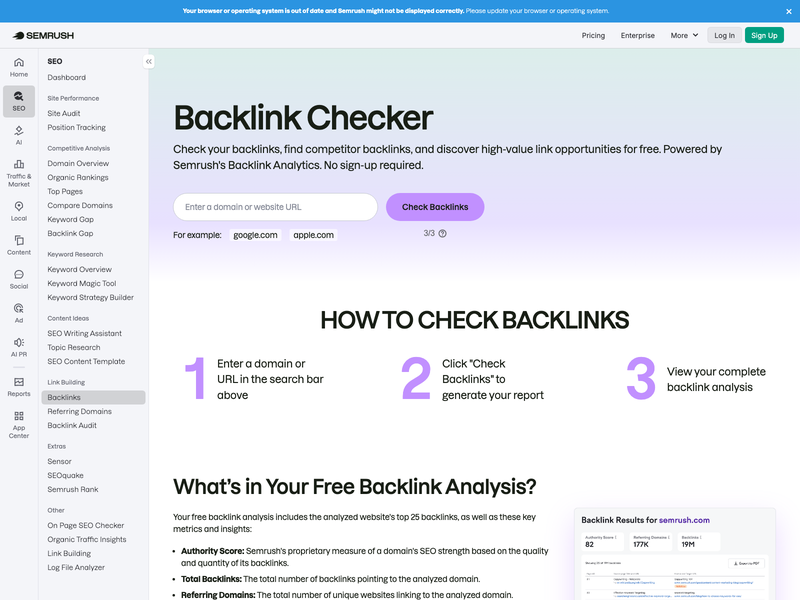
The SEMrush API provides you programmatic access to among the biggest keyword databases readily available: 26 billion keywords throughout 140+ regional databases, plus domain-level competitive intelligence, position tracking, and site audit data. Domain analytics: organic keywords, traffic patterns, and top rivals for any domain Keyword research study: volume, CPC, trouble, and SERP function presence Position tracking: everyday rank data for any keyword list Backlink reports: referring domains, anchor text, and authority scores Traffic analytics: estimated monthly check outs and traffic source breakdown per domain Competitive analysis at scale.
If you require to pull organic keyword overlap between your domain and five competitors immediately, then push those spaces into a prioritization model, the SEMrush API deals with that well. API access requires business strategy or above ($499.95 monthly). API units are acquired individually on top of the subscription.
If you are currently on business plan and spending for it regardless, adding API gain access to is a natural extension. If you are evaluating from scratch and the API is the main reason you want SEMrush, SE Ranking or DataForSEO will give you comparable information at a portion of the cost.
Essential Strategies for Discovering Target Patterns
The Google Analytics Data API provides you programmatic access to all GA4 information: sessions, users, traffic sources, conversion occasions, eCommerce earnings, and engagement metrics. It is the developer-facing version of your GA4 account, and it's complimentary. Automate customized reports for customers or stakeholders without manual exports Pull organic conversion information into CRM lead-scoring models Integrate GA4 data with other sources (advertisement spend, support tickets, profits records) Run batch reports across multiple GA4 residential or commercial properties in a single API call Build audience segmentation reports that GA4's built-in interface does not support Free.
The GA4 Analytics Data API is powerful, but it needs developer credentials and custom-made code. If you run a WordPress site and desire GA4 metrics with no of that setup, Analytify links your GA4 account straight to WordPress through the plugin settings. Analytify reveals per-post traffic, real-time visitors, WooCommerce revenue, kind conversions, and author-level statistics, all inside your WordPress control panel.
Analytify pulls Google Analytics information directly into WordPress IndexNow is a complimentary procedure that tells online search engine the moment a page on your site is included, updated, or gotten rid of. Instead of waiting on Googlebot to discover modifications on its next crawl, you press the alert directly. Many WordPress hosts, CDNs, and CMSs currently support IndexNow natively.
Faster Bing indexing still matters for presence, and faster discovery across any engine minimizes the time between publishing and traffic. Free. Publishing sites, news sites, WooCommerce stores, and any site where material freshness straight drives traffic. The PageSpeed Insights API offers you programmatic access to Lighthouse performance scores and Core Web Vitals information for any URL.
LCP (Largest Contentful Paint): target listed below 2.5 seconds INP (Interaction to Next Paint): target listed below 200 milliseconds CLS (Cumulative Layout Shift): target listed below 0.1 Full Lighthouse ratings for performance, accessibility, and SEO Run a weekly script that inspects these ratings for your 20 most crucial pages. Log the results in a spreadsheet.
Measuring Every Value of Automated SEO Implementation
Capture efficiency regressions before they impact rankings, not after a client notices the traffic drop. Free. Part of Google Cloud APIs. Technical SEOs, designers, and anyone liable for Core Web Vitals. The Google Natural Language API applies maker learning to text. It determines entities (individuals, places, brands, subjects), examines sentiment, and tags parts of speech in any piece of material, at scale.
This API earns its place when you are auditing numerous pages at a time, building a category system for a large item brochure, or trying to comprehend which entities Google associates with a subject cluster. For a team publishing 2 to 3 short articles a week, the manual equivalent- checking out competitors' top-ranking pages and noting what subjects they cover- is faster and simply as efficient.
For example, if you paste the phrase "GA4 tracking" into the API, it returns entities like "Google Analytics", "conversion tracking", "session information", and "eCommerce reporting" as semantically associated ideas, a clear signal of what Google expects a comprehensive short article on this subject to cover. Construct automated content taxonomies for large eCommerce catalogs: classify thousands of products by entity and category without manual work Determine the main subject and sub-topics of any page for content audits throughout large sites Freemium.
Faster Bing indexing still matters for exposure, and faster discovery across any engine minimizes the time in between publishing and traffic. Publishing websites, news websites, WooCommerce stores, and any site where material freshness straight drives traffic.
Choosing Your Right SEO Tools for 2026
LCP (Largest Contentful Paint): target listed below 2.5 seconds INP (Interaction to Next Paint): target listed below 200 milliseconds CLS (Cumulative Layout Shift): target below 0.1 Complete Lighthouse scores for performance, ease of access, and SEO Run a weekly script that examines these scores for your 20 essential pages. Log the results in a spreadsheet.
GSA SER projectsCatch performance regressions before they impact rankings, not after a client notifications the traffic drop. Free. Part of Google Cloud APIs. Technical SEOs, designers, and anybody responsible for Core Web Vitals. The Google Natural Language API uses device discovering to text. It identifies entities (people, locations, brands, subjects), analyzes sentiment, and tags parts of speech in any piece of material, at scale.
This API earns its place when you are auditing numerous pages at a time, building a category system for a large item catalog, or trying to comprehend which entities Google associates with a subject cluster. For a team publishing 2 to 3 short articles a week, the manual equivalent- checking out rivals' top-level pages and noting what topics they cover- is quicker and simply as efficient.
If you paste the phrase "GA4 tracking" into the API, it returns entities like "Google Analytics", "conversion tracking", "session data", and "eCommerce reporting" as semantically associated principles, a clear signal of what Google anticipates an extensive short article on this subject to cover. Build automated content taxonomies for big eCommerce brochures: categorize thousands of products by entity and category without manual labor Recognize the main topic and sub-topics of any page for content audits throughout large websites Freemium.